The Confidential

The ACC Sports Blog

Archive for the category “Football”

Georgia Tech’s Paul Johnson Needs a Tissue or Three

The Confidential has a new Georgia Tech contributor that will take us to task and defend Paul Johnson, but we are going to beat him to the punch by stating that Paul Johnson needs to stop his crying and get on with coaching football.  Apparently, the ACC did not . . . gasp… do enough to placate Georgia Tech and their scheduling requests.  So someone hand Johnson a tissue.

First, let’s remember that the ACC already has to factor in Georgia Tech’s rivalry game with Georgia.  Also, at Georgia Tech’s request, the Yellow Jackets get to feast on something called Alabama A&M the week before.  So that’s two weeks at the end of the season that are blocked out for conference games.  That leaves 12 weeks for the remaining 10 games that need to get scheduled.  It is what it is.  Florida State and Clemson asked for, and received, the same thing.  It helps the rivalry games at the end of the season, but limits the options for the conference games.

Second, Georgia Tech has a midseason OOC game against BYU on October 12, 2013.  It is at BYU.  That kind of stinks.  But, again, nobody forced Georgia Tech to schedule BYU–who is desperate for late season games.  In fact, the aforementioned article noted that the BYU game caused problems by not being early season, like most other OOC games against FBS schools.  Putting such a game at Week 2 would have been better.  Georgia Tech will do that in the future to help solve its own problems.

Third, a lot of this could have been solved by having Pitt play Georgia Tech in Week 2.  But Pitt was already slated to open the season against Florida State on Labor Day–thereby requiring a bye for Week 2’s Saturday games.  That really messed things up because Pitt is one of the other schools with an October game against an OOC opponent.

To be fair, every schedule does have its challenges.  Georgia Tech’s certainly does.  Georgia Tech has an 8-game streak with no bye.  They have to take consecutive trips to BYU and Miami.  They play Duke, North Carolina, Virginia Tech and Miami in consecutive weeks.  And the Virginia Tech game comes with only 5 days rest.

Of course, the Virginia Tech game is at home–as is the game before against North Carolina.  So Georgia Tech does not have to travel to the Thursday game that comes on short rest.  Virginia Tech does.  We don’t hear crying out of Frank Beamer on this issue.  Wake Forest plays consecutive road games against Miami and Syracuse.  That is a lot of travel for the Demon Deacons, without complaint.

Oh, we forgot… North Carolina gets to play Georgia Tech with the Tar Heels having a bye the week before.  Well, Miami gets to play Virginia coming off a bye week.  Clemson plays Florida State after the Seminoles have a bye.  The Seminoles play Boston College after a bye.  Do we hear crying from Golden, Dabo, and Fisher?  No.

Tough schedules?  Check with Georgia.  They play an SEC schedule, plus they play Clemson and Georgia Tech.  Heck, every SEC team plays a tough schedule.

Do you want to know an example of a tough coach?  Syracuse’s former head coach, Doug Marrone.  Last year, coming off a 5-win season and in a contract year, Marrone was given a Syracuse schedule with an opener against 10-win Northwestern at home.  They then had to travel to New Jersey for a “home game” against the well-traveling Southern California Trojans.  They also had to travel to Minnesota.  That’s three games against major conference foes that all went bowling.  Their FCS opponent?  Stony Brook, who went 10-3–not exactly an FCS patsy.  And needing a final game to round out the schedule, Syracuse did not find a directional school.  They chose to go to Missouri.  Even worse, they had to play a 5-win Missouri team that needed to beat Syracuse to make it to a bowl.  Marrone never once complained.  Syracuse did not roll over and lose to Missouri, they rose to the challenge and beat Missouri.  Syracuse ended up winning 7 games against that slate.  The coach showed toughness and the team responded with same.

What message is Paul Johnson sending?  That his team needs to have good fortune in scheduling to perform well.  They need advantages, or at least the absence of disadvantages.  That when the going gets tough, you take to the press to air your grievances.  That it is acceptable to make excuses in advance of concern regarding performance.  That the Georgia Tech scheme is so flimsy that teams with two weeks to prepare for it will solve it.

The better message: “We have a tough schedule this year.  We took on some tough challenges and the conference schedule did not break our way too often.  But we’ve got players and coaches in our locker room that will rise to the challenge and make the fans proud.”

Doug Marrone used that type of message in 2012 and now coaches in the NFL.  Even if he had not done well enough in 2012 to get that opportunity, at least he did not embarrass the school by complaining to the media.


The 2013 Greg Schiano Pansiness In Scheduling Award for the ACC

Nobody rode the coattails of weak scheduling any farther than Greg Schiano.  As noted here previously, Rutgers rise to mediocrity was accompanied by a rather obvious shift to absolutely putrid OOC scheduling.  Well, it worked…as Rutgers is now in the Big 10 and Schiano is now in the NFL.  In the meantime, let’s take a look at the OOC schedules for the ACC teams.  In the spirit of the Oscars, who gets the Greg Schiano award for the ACC in 2013?

First, let’s look at the OOC schedules (courtesy of http://www.theacc.com):

  • Boston College: Villanova, @ USC, Army, @ New Mexico State
  • Clemson: Georgia, South Carolina State, The Citadel, @ South Carolina
  • Duke: North Carolina Central, @ Memphis, Troy, Navy
  • Florida State: Nevada, Bethune-Cookman, Idaho, @ Florida
  • Georgia Tech: Elon, @ BYU, Alabama A&M, Georgia
  • Maryland: Florida Int’l, Old Dominion, @ UConn, West Virginia
  • Miami: Florida Atlantic, Florida, Savannah State, @ USF
  • North Carolina: @ South Carolina, Middle Tennessee, East Carolina, Old Dominion
  • NC State: Louisiana Tech, Richmond, Central Michigan, East Carolina
  • Pittsburgh: New Mexico, Old Dominion, @ Navy, Notre Dame
  • Syracuse: Penn State (Neutral site), @ Northwestern, Wagner, Tulane
  • Virginia: BYU, Oregon, VMI, Ball State
  • Va Tech: Alabama (Neutral site), Western Carolina, @ East Carolina, Marshall
  • Wake Forest: Presbyterian, Louisiana-Monroe, @Army, @ Vanderbilt

Old Dominion might have the toughest schedule East of the Mississippi, with games against Maryland, Pitt, and North Carolina.  Heck, let’s add them to the conference!  Just kidding.

Notably, only a handful of teams play more than one AQ-conference team.  Clemson plays Georgia and South Carolina.  Maryland plays West Virginia and UConn (kinda, sorta).  Miami plays Florida and USF (kinda sorta).  Syracuse plays Penn State and Northwestern.  So those 4 teams can be eliminated from the Schiano Award.

Virginia Tech plays Alabama, Virginia plays Oregon, Florida State plays Florida, Pitt plays Notre Dame, and Boston College plays Southern Cal.  That is five teams that are taking on elite teams, kings of the sport.  We can eliminate them too.  That leaves but 5.

Georgia and Southern Carolina may or may not be Kings, but they are darn goods teams.  We can eliminate North Carolina and Georgia Tech.  Down to 3 teams.

Wake Forest plays @ Vanderbilt and @ Army.  Two road OOC games against decent programs.  Heck, Greg Schiano would not have scheduled a road game against Vandy in the same year as a road trip to Army, so we’ll eliminate the Demon Deacons.  Down to 2.

The two finalists are Duke and North Carolina State.  Duke’s toughest game is either Navy or @ Memphis.  Yep… one of the worst teams in all of FBS may be Duke’s “toughest” game.  For North Carolina State, home games against Louisiana Tech and East Carolina are the choices.  Wait a minute… North Carolina State is not even going on the road at all!  Four home games and zero games against any BCS-level programs?  Methinks we have a winner here.

The 2013 Greg Schiano Pansiness in Schedule Award for the ACC goes to… the North Carolina State Wolfpack!


FOOTBALL COMPETITION AND REVENUE: PART I

This is a two-part series—a joint venture between HokieMark, who founder of http://accfootballrx.blogspot.com/ and acaffrey, founder of this blog.  We all need to thank HokieMark for putting this data into a very useful spreadsheet that allows the analysis. This data is out there for anyone to see. You may think you know what the correlation is between spending on football and on-field success. The purpose of this two-part article is to analyze whether you were right—what is the true correlation, if any, between spending on football and on-field success. Part I will explain the nature of the concern and some of the analysis. Part II will complete the analysis. Instead of publishing these on different days, we’ll publish them on different blogs. Remember to check out both. And we hope that you will take the time to comment on the discussion.  This is Part I.  Here is the link to Part II.

Part I

From 1973 to 1975, Florida State went 4-29 in football. Needless to say, the Seminoles were not a football “king” back then. In 1976, they hired a head coach named Bobby Bowden. Bowden had immediate success in turning the Seminoles into a decent football school, with a 10-win season and Tangerine Bowl appearance in 1977 and an 11-win season and Orange Bowl appearance in 1979. By 1987, the Seminoles went 11-2, beginning an incredible streak of fourteen straight 10+ win seasons. During this period, Florida State moved from football independence to the Atlantic Coast Conference (“ACC”). This did not slow the Seminoles down at all. As the calendar passed into a new millennium, Florida State was a football “king” by any definition.

However, for an 18-year-old college freshman on September 1, 2012, it had been quite a while since Florida State was in the hunt for a national title. Indeed, this person would have been in the first grade the last time the Seminoles had a 10-win season—the 11-2 campaign in 2000. To that person, college football was all about the Southeastern Conference (“SEC”), with schools like LSU, Florida, Auburn, and Alabama winning national title after national title. Meanwhile, Florida State was struggling to get into the ACC championship game. How times had changed.

Of course, that same college freshman would have spent the summer of 2012 listening to Florida State fans discuss how they absolutely needed to move to a better football conference. To these fans, Florida State could not compete with their neighbors in the SEC because of the huge revenue disparity. It is unclear whether these fans were using money as an excuse for the mediocrity of the prior decade or expressing concern about the next decade to come. Fortunately for the Seminoles, Jimbo Fisher did not care about the revenue, instead just going back to doing what always worked in the past—developing recruits and coaching them well. In 2012, Fisher led the Seminoles to a 12-2 record, an ACC Championship, and an Orange Bowl victory.

But what about that proverbial “smoke” regarding the inability to financially compete with the SEC schools on the football field? Is there “fire” underlying this oft-repeated concern? Well, two ACC blogs decided to take a look at the actual numbers.

As a preliminary matter, it should be noted that revenue has not prevented non-AQ schools from being competitive. Boise State spent approximately $8M on football for data ending in June 2012. Future Big East members Houston and Tulane each spent more, actually.

Boston College spent more than twice as much as Boise State—an amazing $18M! Interestingly, Boston College also spent $10M on basketball, as well as $5M on hockey. The Eagles may have struggled on the court and on the field, but they spent some serious money to try to be competitive. Unfortunately, it did not work. You do not need a fancy degree to figure out that Boise State is a LOT more successful at football right now than Boston College.

We do not need to pick on Boston College. A lot of big spenders did poorly. Duke spent over $20M on football. Tennessee and Vanderbilt spend a similar amount of money on football–$20M and $19M, respectively. It has been quite a while since either played in a BCS bowl. Of course—these statistics are further interesting. Duke and Boston College spent about $38M on football, while Tennessee and Vanderbilt of the vaunted SEC spent about $37M on football. Can critics of the ACC really suggest that the ACC does not care about football when two of its private schools are spending more than two SEC counterparts?

Of course, not all SEC schools bother to spend as much on football as Tennessee and Vanderbilt. The Mississippi schools put a total of $24M into their two respective football programs. Kentucky does a little better, investing $14M.

Surely, the uber-wealthy Big 10 is all about football, right? Not so fast. Illinois, Minnesota, Indiana, and Purdue all spend less than $17M on football. In fact, those four schools spent a total of $63M. That is approximately $16M per school.

But what about the ACC? Well, as noted above, Duke and Boston College do their part, spending $38M between them. Wake Forest, another school criticized for its football prowess (despite tending to beat Florida State), did lag behind by spending only $15M on football. Future Big 10 member, Maryland, fits right in at $14M. Still, these four ACC schools spent $67M on football, more than the four Big 10 schools discussed above.

In Part II, we will move away from the lower echelon of football success and take a look at the big football names and football expenses.


Taking Action on Conference Realignment- Contact Information for Fans

UPDATE- With recent rumors  that UNC, GT, UVA and FSU are leaving, please focus on those schools, Jim Delany, John Swofford and ESPN if you are going to contact someone on this list. Unfortunately, I could not find email addresses for John Swofford, Jim Delany and John Skipper. If you DO find them, please post them to the comments section, and I will edit this post. It appears that the greatest need can be found with these parties. We deserve a say in this too. This is OUR conference. I’ve included my original message below. DON’T FORGET TO SIGN THE PETITION ON CHANGE.ORG.

Thank you to everyone who has provided feedback on my latest article regarding conference realignment. I really appreciate it, and this type of discussion is why I enjoy Atlantic Coast Confidential so much. While I plan discuss issues such as television ratings and academics in the near future, I wanted to provide everyone with a comprehensive list of individuals with a significant stake in the ACC’s future.   While this is all public information, please respect the time and position of these individuals, if and when contacting them.

I truly believe that the ACC has a bright future in college athletics. Yes, many changes can be, and need to be made, for the league to reach its full potential. But this is why I have provided the information below. Joining another conference is a short-term solution without a long-term vision. While football is driving the flow of money right now, its future is in doubt due to rule changes, governmental intervention and increasing awareness of injuries. Baseball was once America’s past time, but was replaced by football. Ice skating and boxing were once among the most popular sports in the country. If, and of course there are many factors involved, football ceases to be on top, where would you want your school?  Would you want to be geographically and culturally isolated, playing very few of your longtime rivals, or would you like to be in a group based off of common geographic, athletic, academic and social characteristics? No other conference has better media markets, basketball, lacrosse, baseball, soccer and academics than the ACC. Our football is undeniably on the way up. There is more potential in the ACC than any other conference. Please share this with your friends, retweet it, post it on Facebook, or whatever you need to do. By working together, and having our voice heard as fans, I believe that we can make a difference.

Boston College
Father William P. Leahy, S.J. (william.leahy@bc.edu)
Office of the President
140 Commonwealth Ave.
Chestnut Hill, MA 02467

Bradley J. Bates (brad.bates@bc.edu)
Director of Athletics
140 Commonwealth Ave.
Chestnut Hill, MA 02467
_____________________________________________________________________________________________
Clemson University
Dr. James F. Barker, FAIA (jbarker@clemson.edu)
Office of the President
Clemson University
201 Sikes Hall
Clemson, SC 29634

Dan Radakovich (athldir@clemson.edu)
Director of Athletics
Jervey Athletic Center
PO Box 31
Clemson, SC 29633
_____________________________________________________________________________________________
Duke University
Dr. Richard H. Brodhead (president@duke.edu)
Duke University
207 Allen Building
Box 90001
Durham, NC 27708

Kevin White (kwhite@duaa.duke.edu)
Director of Athletics
Box 90555
Durham, NC 27708
____________________________________________________________________________________
Florida State University
Dr. Eric J. Barron (ebarron@fsu.edu)
Office of the President
600 W. College Avenue
Tallahassee, FL 32306

Randy Spetman (rspetman@fsu.edu)
Director of Athletics
PO Box 2195
Tallahassee, FL 32316
____________________________________________________________________________________
Georgia Tech
Dr. G.P. Peterson (bud.peterson@gatech.edu)
Office of the President
Georgia Institute of Technology
North Ave.
Atlanta, GA 30332

Paul Griffin (njameson@athletics.gatech.edu)
Acting Athletic Director
150 Bobby Dodd Way, N.W.
Atlanta, GA 30332
_____________________________________________________________________________________________

University of Louisville
Dr. James Ramsey (jrrams02@louisville.edu)
Office of the President
University of Louisville
Louisville, KY 40292

Tom Jurich (tom@GoCards.com)
Director of Athletics
Athletics Department
University of Louisville
Louisville, KY 40292
________________________________________________________________________________________________
University of Miami
Dr. Donna E. Shalala (dshalala@miami.edu)
Office of the President
University of Miami
PO Box 248006
Coral Gables, FL 33124

Blake James (dgentile@miami.edu)
Director of Athletics
University of Miami Athletics
5821 San Amaro Drive
Coral Gables, FL 33146
_____________________________________________________________________________________________
University of North Carolina
Dr. Holden Thorp (chancellor@unc.edu)
Office of the Chancellor
103 South Building
Campus Box 9100
Chapel Hill, NC 27599

Bubba Cunningham (bubba.cunningham@unc.edu)
Director of Athletics
UNC Athletic Department
P.O. Box 2126
Chapel Hill, NC 27514
__________________________________________________________________________________

North Carolina State University
Dr. Randy Woodson (Chancellor@ncsu.edu)
Office of the Chancellor
Campus Box 7001, A Holladay Hall
Raleigh, NC, 27695

Deborah A. Yow (d_yow@ncsu.edu)
Weisiger Brown Building
2500 Warren Carrol Dr.
Campus Box 8502
Raleigh, NC 27695
_____________________________________________________________________________________________

University of Notre Dame
Rev. John I Jenkins, C.S.C. (president@nd.edu)
Office of the President
400 Main Building
Notre Dame, IN 46556

Jack Swarbrick (tinkham.1@nd.edu)
Director of Athletics
University of Notre Dame
C113 Joyce Center
Notre Dame, IN 46556
_____________________________________________________________________________________________

University of Pittsburgh
Dr. Mark A. Nordenberg (norden@pitt.edu)
Office of the Chancellor
University of Pittsburgh
107 Cathedral of Learning
Pittsburgh, PA 15260

Steve Pederson (spederson@athletics.pitt.edu)
University of Pittsburgh
Department of Athletics
PO Box 7436
Pittsburgh, PA 15213
_____________________________________________________________________________________________
Syracuse University
Dr. Nancy Cantor (ncantor@syr.edu)
Office of the Chancellor
900 S. Crouse Avenue
Crouse-Hinds Hall, Suite 600
Syracuse, New York 13244

Dr. Daryl Gross (Djgross@syr.edu)
Director of Athletics
Manley Field House
1201 E. Colvin St.
Syracuse, NY 13244
_____________________________________________________________________________________________

University of Virginia
Dr. Teresa A Sullivan (jdb4d@virginia.edu)
Office of the President
PO Box 400224
Charlottesville, VA 22904

Craig Littlepage
Director of Athletics
McCue Center- PO Box 400846
Charlottesville, VA 22904
_____________________________________________________________________________________________

Virginia Tech
Dr. Charles W. Steger (president@vt.edu)
Office of the President
210 Burruss Hall
Blacksburg, VA 24061

Jim Weaver (weaverj@vt.edu)
Director of Athletics
Virginia Tech Athletics Department
Jamerson Athletic Center/Cassell Coliseum/Merryman Center
Virginia Tech (0502)
Blacksburg, VA 24061
_____________________________________________________________________________________________
Wake Forest University
Dr. Nathan O. Hatch (nhatch@wfu.edu)
Office of the President
211 Reynolda Hall
P.O. Box 7226
Winston-Salem, NC 27109

Ron Wellman (halldf@wfu.edu)
Director of Athletics
PO Box 7265
Winston-Salem, NC 27109
_____________________________________________________________________________________________
John Skipper
President- ESPN
ESPN Plaza
Bristol, CT 06010

John Swofford
Commissioner
Atlantic Coast Conference
4512 Weybridge Lane
Greensboro, NC 27407

Jim Delany
Commissioner
Big Ten Conference
1500 West Higgins Rd
Park Ridge, IL 60068

Larry Scott
Commissioner
Pac-12 Conference
1350 Treat Blvd
Walnut Creek, CA

Mike Slive
Commissioner
Southeastern Conference
2201 Richard Arrington Blvd. North
Birmingham, AL 35203

Bob Bowlsby
Commissioner
Big 12 Conference
400 East John Carpenter Freeway
Irving, TX 75062


Miami Accused of Lack of Institutional Control

Hopefully our Miami correspondent will have much more on this later, but the NCAA finally got around to handing down its allegations to Miami–lack of institutional control.  Of course, the real issue for Miami fans is what kind of sanctions the Hurricanes are looking at.  But at least Miami has an idea of exactly what violations the NCAA is pursuing.

To its  credit, Miami has self-imposed significant sanctions already, including the voluntary loss of two bowls.  Of course, Penn State fans will probably make the argument that Miami’s crimes are worse NCAA violations than what happened in Happy Valley.

Canes Update

I’ve been busy recently, sorry for the lack of updates.

Some big news for the Canes

Despite recent struggles on the road, the Canes have ascended to #2 in the nation in College Basketball. An ugly defensive showing in FSU’s house almost lead to an upset, and awful offense in Little John led to a narrow Miami W against Clemson. Miami returns home for a bit, where they (hopefully) will get back to full health and energy.

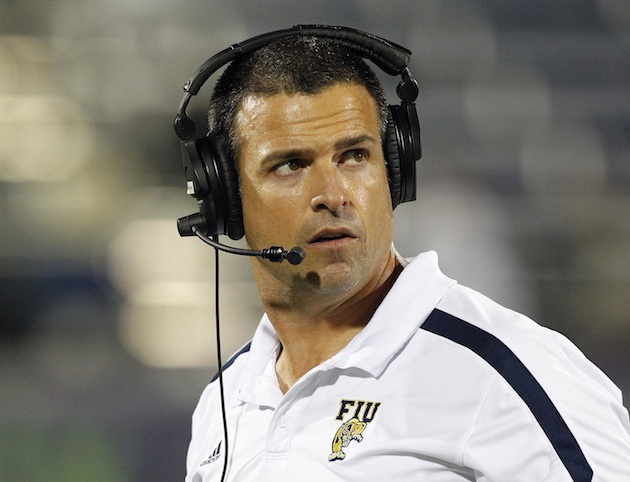
New TE coach/Assistant Head Coach, Mario Cristobal, is gone, after only a month. He left to take the OL job at Bama, and he will serve as an Assistant Head Coach their. This was probably a recruiting move made by Bama, Cristobal knows South Florida inside out.

NCAA Football: UL Monroe at Florida International

Mario Cristobal appeared to have FIU uprising until a surprising 3-9 season

More news on the Miami-NCAA mess. If you’ve been trying to keep up with the NCAA’s investigation of itself, today they announced these findings:

    • Knowingly circumvented legal advice to engage Nevin Shapiro’s criminal defense attorney.
    • Violated the internal NCAA policy of legal counsel only being retained and monitored by the legal staff.
    • Paid insufficient attention to the concern that engaging the criminal defense attorney could constitute an inappropriate manipulation of the bankruptcy process.
    • Did not sufficiently consider the membership’s understanding about the limits of the enforcement staff’s investigative powers.
    • Did not violate a specific bylaw or law.

    Additionally, the report found:

    • Enforcement leadership exercised insufficient oversight of the engagement of the criminal defense attorney.
    • The legal and enforcement staffs took appropriate action to rectify the situation once they realized select enforcement

FSU News: The Monday Chop

Latest news on everything FSU

FSU holds junior day:  FSU is in the middle of two big recruiting weekends.  Jimbo got a commitment from Kamryn Pettway, who is a 220 pound junior running back.  It is clear Jimbo is trying to find the next Lonnie Pryor.  Pryor played an enormous role in Jimbo’s offense, even as a “fullback” so I don’t think it’s a hard job to sell.  Jimbo is also pursuing QB JJ Cosentino pretty hard.  JJ tore his ACL in his sophomore year, so he might be a little underrated.  He comes from the same school as Dan Marino and… Sal Suneri.  Sal’s impact on the coaching staff, just from a recruiting standpoint, has been immense.  On the other side of the ball, all he pretty much has to say is that he coached Julius Peppers.

Looking forward to spring:  There will be many position battles this spring–the most important being at quarterback.  The candidates are Clint Trickett (an undersized coach’s son who knows the playbook in-and-out), Jacob Coker (an underrated QB out of high school with all of the physical tools), and Jameis Winston (a two-sport star who was the top dual threat QB in 2012).  One thing I’m worried about is the fact that Jameis Winston is playing baseball and does a good deal of pitching.  Pitchers get all sorts of elbow and shoulder injuries.  Wear and tear aside, the effect this can have on his throwing motion is unknown.  Folks have cited to the fact that Deion Sanders and Bo Jackson both played, at a high level, football and baseball.  Yes, but neither Sanders nor Jackson played QB.  This will be a story line to watch going forward and count me in the Coker camp.  Less wear and tear, one more year in the system than Winston, and a sole focus on football.

The lack of news on FSU’s new offensive coordinator:  The last public bit of knowledge about FSU’s offensive coordinator position was that Jimbo would be interviewing candidates.  Last week, we heard of two candidates, the former UCLA OC Mike Johnson and the current USC WR coach Tee Martin.  No other candidates have surfaced.  This could mean a few things–Jimbo liked one of them and is working on a contract or Jimbo was upset that information was leaking and is trying to do things more covertly.  My preference is still Chris Weinke to come in and be the QB coach.  It’s a bit delusional to think Jimbo would defer coaching QBs to Weinke, but it would be in the best interest of the program.  It is one thing to bring in recruits and show them sealed lockers of FSU greats.  It is another thing to actually have one of those greats on the sideline and recruiting.  Chant Rant was the first to float this idea, so I will give them due credit, but this just seems like a no-brainer move.

In other news:  Mario Cristobal, the former FIU head coach and current (well, no longer current) UM offensive line coach, has accepted a position with Nick Saban as their offensive line coach.  A lateral move in title, sure, but a tremendous opportunity for Cristobal.  Cristobal was on the UM staff for all of two months.  He even helped court former FSU OC James Coley to UM.  This won’t likely have any real long-term effect on UM, but for FSU fans, it’s a bit of a consolation prize to see Cristobal up and leave.  Also, and quietly, UM has lost a considerable amount of coaches this off-season.

Speaking of coaching changes:  FSU almost lost another assistant.  This time around it was Lawrence Dawsey.  Noles247 reported that NFL teams have called Lawrence Dawsey.  I really can’t speak to Dawsey’s coaching prowess–to be honest, I have expected more out of some of the FSU WRs like Rodney Smith and Kelvin Benjamin.  Those two receivers have the ability to control a game just with their size.  We just never seem to utilize them the way they should be and maybe that’s just more of a reflection of Jimbo’s offense than Dawsey’s ability to coach them up.  I will say this, however:  Dawsey is a loyal Seminole.  It’s clear he wants to be at FSU and so I hope they repay him in kind.

FSU’s ACC Championship Game woes getting attention:  A few outlets have been picking up the FSU story about the half-a-million-dollars-in-debt that it incurred just for appearing in the ACC Championship game.  One outlet, NBC Sports, opines that the only loss in this setting should be on the field–not in the pocket book.  If you want examples of how the ACC is not helping football schools, this may be one of them.  The current formula is not working.  Sure, Swofford has said that they are working to ensure that no school suffers a financial loss because of its appearance in the game, but the ACC Championship games haven’t been relevant or exciting in a long time.  That indicates to me something has to change… granted, they’ve tinkered with the venue a few times, but is Charlotte really the best place?  I think it is too difficult to try and predict who will be in the championship game, so it’s not worth placing it in Charlotte or Jacksonville.  The right place should be at the stadium of the team with the better record, or a tie-breaker of some sort.  They can work out a 60/40 split and it may even be an added incentive for teams to push harder down the stretch.  The fact that FSU lost half a million dollars playing in this game is not going to help the ACC’s cause in trying to stick together.

My other hope for change is some divisional realignment.  FSU fans could care less about Pittsburgh–it is Georgia Tech that FSU should be playing every year.  It is one of the easiest things the ACC can do to help Florida State… a trip to Boston is more expensive and less exciting (on the field) than it is to Atlanta.  This is an ACC Blog, so I’m confident my colleagues will have varying opinions, but I like to stoke the fire some.

The only bright spot of the ACC Championship game, and winning it, is this awesome video about FSU going to the Orange Bowl.  Enjoy.

FSU: search for OC, recruiting, and ACC woes

fsu.renegade

News on the latest with FSU

Search for OC continues:  Ever since James Coley left, Jimbo Fisher has been operating with one less position coach.  Recently, it was rumored that former UCLA OC Mike Johnson was on campus for an interview.  Meanwhile, Tee Martin, current WRs coach at USC, was rumored to be also interviewing for the offensive coordinator position.  There haven’t been many leaks about who’s getting hired, so no one truly knows.  The big question will be whether the person named offensive coordinator is actually going to be the person who calls the plays someday.  Remember, Jimbo still calls the plays at FSU.  He admitted late last year that getting a real OC was part of his 5 year plan.  FSU currently has two former OCs as assistants (Randy Sanders, RB coach and Billy Napier, TE coach).  The wildcard here is that Jimbo promotes one of them to OC and hires an assistant with ties to the Miami area.

Early 2013 rankings:  FSU comes in at 16 according to Schlabach.  Here’s what Schabach had to say:

“The Seminoles underwent a complete facelift after finishing 12-2 last season. Coach Jimbo Fisher lost six assistants from his staff, including defensive coordinator Mark Stoops (Kentucky’s new coach) and offensive coordinator James Coley (same position at Miami). Fisher hired former Alabama assistant Jeremy Pruitt as his defensive coordinator and has yet to hire an offensive coordinator, although Fisher will probably continue to call FSU’s plays. Despite the staff overhaul, Fisher was able to bring in the country’s ninth-best recruiting class, which included No. 4 cornerback Jalen Ramsey, No. 5 defensive tackle DeMarcus Walker and No. 10 outside linebacker Matthew Thomas. The Seminoles will spend the spring looking for a new quarterback after losing EJ Manuel, who won four bowl games. They’ll also have to rebuild their defensive line, especially after star end Bjoern Werner left for the NFL draft.”

He’s spot on.  It’s a rebuild.  New coaches, new QB, new players on defense and new scheme.  Meanwhile, Clemson clocks in at 11.  It’s absolutely imperative for the ACC to have two top 20 teams.  At a minimum.

Recruiting:  This week, Rivals published its list of best recruiters.  Topping the list is Mike Groh at Alabama, but 2 FSU coaches made the list: Jeremy Pruitt and Odell Haggins.  The funny thing about Pruitt is that he was only on the staff for a month.  But he was able to pull a top 5 DE, CB and then brought in a few sleepers he evaluated himself.  Not bad work.  Odell, meanwhile, is the most underrated FSU coach has.  Looking around the ACC, Clemson’s Venables got props as a top recruiter, but so did Mike Locksley at Maryland.  Maryland absolutely killed it in this class…

Speaking of recruiting, Noles 247 released an article this week about the recruitment of Matthew Thomas.  I’m not sure what’s worse; that he said he would have gone to USC if his mom signed the LOI or that Denver Kirkland would have gone to FSU if Thomas told him he was going.

ACC Woes:  Warchant.com released an article this week about FSU’s major loss… to the tune of $478,000 for showing up to the ACC Championship Game.  How does this happen?  There’s only one answer in my book: hold conference championships at the “home” team’s field.  Obviously, come up with a revenue sharing strategy, but I know how the ACC could have sold 82,000 tickets and given both FSU and GT real money for having played in the ACC Championship Game.  It’s an easy fix.

A blurb on basketball:  I’ve been meaning to write about FSU’s squad this year.  Truth be told, they were green going into the year and then all hell broke loose with injuries.  It has been a tough year to watch.  They lost a battle against UM this week and took them to the wire.  Today, FSU plays BC today in Boston.  A win could go a long way to saving the season and building momentum.  Of course, while this season may be lost while we rebuild, next year will be great with Andrew Wiggins.

As always, please comment and Go Noles!

Rutgers Very Nervous: Big 10 Will Not Schedule FCS Games

According to Barry Alvarez, or more accurately according to CBS Sports quoting Alvarez, the Big 10 will no longer schedule games against FCS schools.  The most immediate reaction is extreme nervousness in Rutgers.  However, Rutgers has perfected the art of scheduling crappy FBS teams, so the need for panic is overblown.

For fun, let’s just look at Rutgers’ history in the Big East era (stats courtesy of http://www.jhowell.net/cf/scores/Rutgers.htm#2012).  From 1993 to 2000, Rutgers record was a well below-average 24-63. But at least there are some decent OOC opponents each year, such as Penn State, Notre Dame, and Texas.  In fact, one year–1999–featured Texas, California, and Wake Forest, three major conference opponents.  There were three seasons where Rutgers took on two major conference opponents, 1993, 1995, and 2000.  Not that Duke is that strong an opponent, but it’s still reasonable.

But then in 2001, a scheduling philosophy emerged–cupcake city.  From 2001 to 2011, the BEST OOC opponents scheduled by Rutgers for each season were as follows:

  • 2001: A 1-10 California team
  • 2002: Tough schedule–Tennessee and Notre Dame
  • 2003: Michigan State
  • 2004: Michigan State
  • 2005: Navy (only BCS foe was Illinois)
  • 2006: North Carolina
  • 2007: Maryland
  • 2008: North Carolina
  • 2009: Maryland
  • 2010: North Carolina
  • 2011: North Carolina
  • 2012: Arkansas

Thus, between 2003 and 2011, the toughest opponent Rutgers faced was some combination of North Carolina, Michigan State, Maryland, and Navy.   But it is not like Rutgers was scheduling in quantity, with three BCS foes.  Instead, for the most part, it was Army and Navy that would provide the more difficult 2nd and 3rd games.  The rest of the schedule would be MACtion and FCS.  Not surprisingly, playing these soft schedules led to a historical surge in wins.

Sure, you say… the Big East was too strong for Rutgers to schedule tough.  Really?  In 2002, equally inept Temple scheduled South Carolina and Oregon State.  Pitt scheduled Notre Dame and Texas A&M.  Boston College scheduled Stanford and Notre Dame.  West Virginia scheduled Wisconsin and Maryland.  Syracuse scheduled Auburn and North Carolina.  Virginia Tech scheduled LSU and Texas A&M (in addition to rivalry game against Virginia).  Miami scheduled Tennessee and Florida (in addition to rivalry game against Florida State).

OK, perhaps you can rationalize that because that was the older, tougher Big East.  Fast forward to 2007.  Rutgers OOC slate was Maryland (6-7), Buffalo (MAC), Navy (8-5), Army (3-9), and Norfolk State (FCS).  In contrast, Syracuse scheduled Washington, Illinois, and Iowa.  Pitt scheduled Michigan State and Virginia.  Louisville had Utah, Kentucky, and NC State on the slate.  UConn–just making the move to FBS–scheduled Virginia and Duke.  South Florida challenged itself with North Carolina and Auburn.  Cincinnati had a weak schedule too, with only Oregon State having any relevance. West Virginia had Maryland and Mississippi State.  Again, if Rutgers was not the weakest schedule, it was second weakest to only Cincinnati.

2012?  With the recent success, surely Rutgers would have taken on some tough opponents?  Nah.  Rutgers deserves credit for scheduling a trip to Arkansas–the first game against an arguable king of college football since 2002.  But the rest of the schedule was Tulane, Howard, Kent, and Army.  Wow.  Again, the other Big East schools were way ahead of Rutgers.  Temple could not get a 5th OOC game, but still found room for Penn State and Maryland.  UConn missed a bowl, but scheduled North Carolina State and Maryland.  Pitt had Virginia Tech and Notre Dame on the slate.  South Florida faced local kings Miami and Florida State.  Syracuse had an incredible Northwestern, Minnesota (road), USC (neutral), and Missouri (road).  Cincinnati was weak–with only Virginia Tech being a tough foe.  Finally, Louisville had North Carolina and Kentucky.  Again, Cincinnati is the only school providing Rutgers competition for weakest schedule.

While the Big 10 shifts away from FCS games, Rutgers will still be able to sprinkle in the MACtion and Army/Navy games.  At least playing a Big 10 schedule will provide some toughness.  Although Penn State’s sanctions and Maryland’s woes mean that the two rivals will be well-below par.  But at least Rutgers will see what it is like to play multiple football kings in a single season.  It has not happened much in the past 20 years and almost never in the past dozen.  Winning is impressive, but only when you beat good teams too.  Going big time might mean a return to small time win totals.

ACC Poll Day–If Notre Dame Went All-In with the ACC, Who Do You Like For Team #16

Today is a good day for a poll.  Query–if Notre Dame was to shock the world by going “all-in” for the ACC, giving it 15 teams, who would you like for team #16?  Let’s assume that schools from the SEC, Big XII, and Big 10 are out of the mix because…. they are.  Nobody is taking a pay cut to join the ACC.  It is what it is.

The candidates:

  • Connecticut.  Pros–outstanding hoops (mens and womens) & competent football, with at least one BCS appearance.  Rivalries with Syracuse and Pitt, and a huge rivalry potential with Boston College.  Even Duke-UConn womens hoops would be huge.  Cons–only competent football, not outstanding football.  Geographical overlap with Boston College.  Not a pedigreed football name.
  • Cincinnati.  Pros–new market (southern Ohio), good football recently, and some decent hoops.  Close to Pittsburgh & Louisville for potential rivalries.  Cons–small market, as Ohio is dominated by Ohio State, while neighboring Kentucky is  swallowed by Louisville and Kentucky.
  • Navy.  Pros–national name and a partner for Notre Dame.  Back into the Maryland/DC market.  Cons–terrible hoops in the post-David Robinson era.  Football would not exactly be an upgrade–although it is hard to say that Navy is demonstrably worse than UConn or Cincinnati in the big picture.
  • South Florida.  Pros–outstanding location for football recruiting and potential.  Cons–ACC already has the Florida market in check with Miami and FSU.  Hoops team has not done much, and the football team has underachieved of late.  Not a national name by any stretch.
  • Temple.  Pros–Philly market, good hoops history, and potential for football.  Cons–football has been more bad than good in the modern era, especially in the absence of a certain Mr. Golden.
  • Hybrid craziness.  Let’s say #16 gets to be UConn for hoops, Navy for football, and Johns Hopkins for lacrosse–take it or leave it, folks.  Or some other combination, like VCU for hoops subbing in for a UConn not being happy with a partial membership.

Anyone else out there?  This seems to be the list.

Who do you like and why?

Post Navigation